by Nicklas Nickel
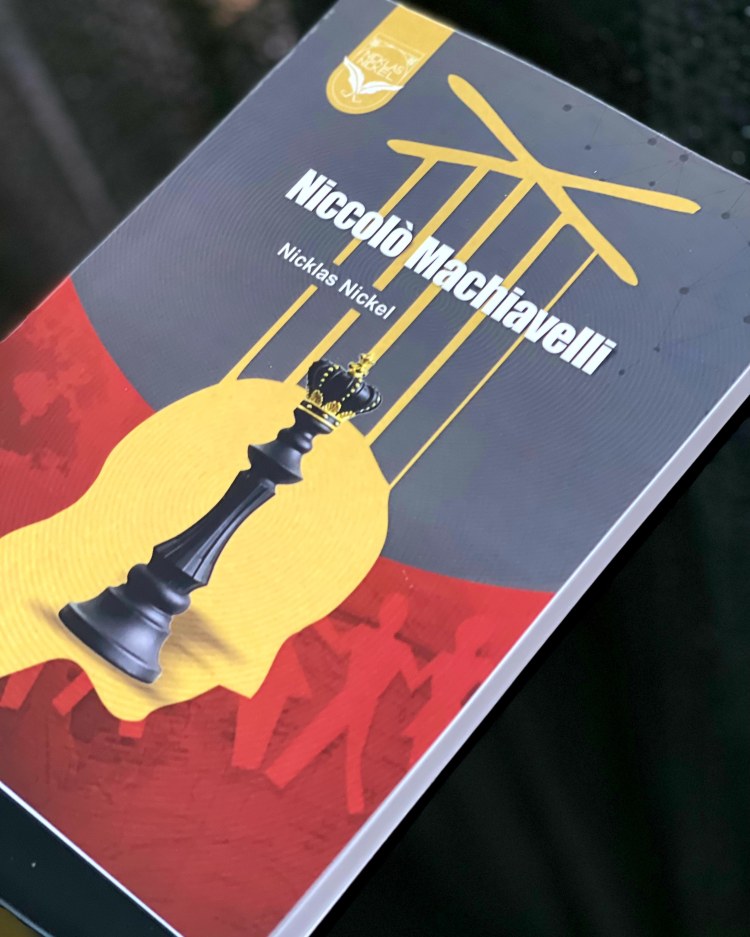
Niccolo Machiavelli lived in Italy during the Renaissance era and is renowned for his political treatise, The Prince. In his writing, Machiavelli argued that leaders must prioritize power and success above morality and ethics. He believed that a ruler must be willing to use any means necessary, including violence, to maintain control and achieve their goals. Additionally, he contended that fear is more effective than love in maintaining authority.
Machiavelli’s ideas were revolutionary and went against the prevailing Christian and humanist beliefs of his time. He was a realist and believed that politics should be judged by its outcomes, not its intentions. The Prince was not well-received at the time of its publication, and Machiavelli himself was labeled as a dangerous thinker.
Machiavelli’s ideas have had a profound impact on the world of politics and continue to shape the way that leaders think about power and leadership. His focus on achieving success at any cost has led many to view him as a controversial and even dangerous thinker. However, despite the negative connotations associated with his name, his ideas have remained relevant throughout history.
One area in which we can see the influence of Machiavellian ideas is in contemporary Russian politics. Putin’s approach to leadership has been described as Machiavellian, as he has been accused of using ruthless tactics to maintain his grip on power. Putin has pursued an aggressive foreign policy, annexing Crimea and intervening in conflicts in Syria and Ukraine. He has also been accused of using the security services to crack down on political opposition and limiting press freedom.
However, it is important to note that Putin’s leadership style cannot be reduced to a simple adherence to Machiavellian ideas. His political philosophy is grounded in a belief in Russian exceptionalism and the need to restore Russia’s influence in the world. Putin sees himself as a strong leader who is protecting the interests of the Russian people, and his actions reflect this belief.
Furthermore, while Putin’s approach has been effective in consolidating his power and achieving his goals, it has also drawn criticism from the international community. Many have condemned his tactics, arguing that they are harmful to human rights and democracy. The conflict between Russia and the West has been a defining feature of global politics in recent years, and it is clear that Putin’s leadership style has played a significant role in this.
In my book on Machiavelli, I explore the broader implications of his ideas for contemporary politics. While his focus on achieving success at any cost may be effective in certain contexts, it is important to consider the ethical implications of such an approach. Machiavellian ideas can be useful in understanding the tactics of contemporary leaders, but they must be evaluated in their historical and cultural contexts
It is also important to recognize that there are alternative approaches to leadership that prioritize ethics and morality. Leaders who prioritize these values may be less successful in achieving their goals in the short term, but they are more likely to create sustainable and just societies in the long term. This is a key lesson that can be drawn from Machiavellian ideas and applied to contemporary politics.
In conclusion, Machiavellian ideas have had a significant impact on contemporary politics, and we can see echoes of his ideas in the leadership styles of many modern leaders, including Putin. While his ideas have been criticized for their brutality and disregard for human rights, they continue to be relevant today. However, it is important to consider the ethical implications of pursuing power at any cost, and to recognize that there are alternative approaches to leadership that prioritize ethics and morality.
 Nicklas Nickel